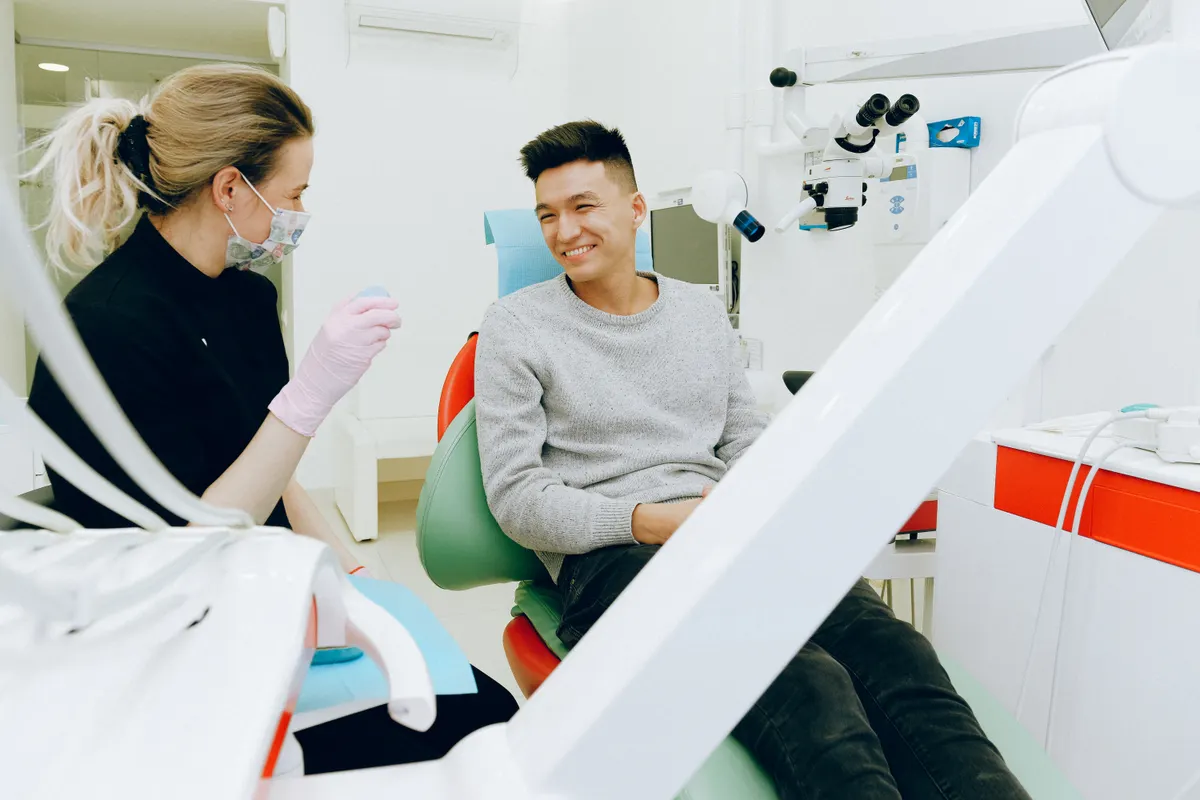

Inside every tooth, beneath the hard enamel, is a soft tissue chamber called the pulp. The pulp contains blood vessels and nerves. Root canal treatment removes infected or inflamed pulp tissue, seals the canals, and saves the tooth from extraction.
🦷 The alternative to root canal treatment is extraction. Root canal treatment saves the natural tooth. Preserving the natural root is almost always preferable where possible.
Step 1: Diagnosis and X-rays
Digital X-rays assess the number and shape of root canals and the extent of any infection. At Accord Dental Practice, Dr. Gadde uses precise digital imaging to plan each case individually.
Step 2: Local anaesthetic
The tooth is thoroughly numbed before any treatment begins. With modern anaesthetic techniques, root canal treatment should be no more uncomfortable than a filling. You will feel pressure and vibration - not pain.
Step 3: Rubber dam placement
A rubber dam isolates the tooth, keeps the area dry, and protects you from instruments and irrigants. It is an essential component of high-quality endodontic treatment.
Step 4: Access and pulp removal
A small opening is made through the crown of the tooth to access the pulp chamber. The infected tissue is removed from the chamber.
Step 5: Canal shaping
Fine nickel-titanium rotary files shape and clean the canals. Sodium hypochlorite irrigation dissolves organic debris and kills bacteria throughout the process.
Step 6: Obturation (filling the canals)
Once cleaned and dried, the canals are filled with gutta-percha - a biocompatible material - and sealed with cement. The goal is a complete, hermetic seal along the full length of each canal.
Step 7: Final restoration
The access opening is sealed with a temporary or permanent restoration. A crown is strongly recommended for back teeth - see our guide on why a crown is needed after root canal treatment.
Does it hurt?
With effective anaesthetic, the procedure should be painless. Some soreness for 2 - 4 days afterwards is normal. Full aftercare guidance is in our root canal aftercare guide.
Dr. Gadde holds a Postgraduate Diploma in Endodontics from King's College London. Learn more about root canal treatment at Accord Dental Practice, Camberley.